:
In the world of cryptocurrency, securing your digital assets while maintaining easy access to them is essential. Trezor Suite is a comprehensive application designed to give users control over their crypto holdings while reinforcing security at every step. It’s built to work with Trezor hardware wallets, offering a unified platform for portfolio tracking, transactions, buying, selling, swapping, and more — all with robust privacy protections. Understanding how Trezor Suite functions and why it matters will help both beginners and experienced crypto users make the most of their assets.
At its core, Trezor Suite serves as the official interface for managing your cryptocurrency assets held on a Trezor device. The app is available on multiple platforms, including desktop systems like Windows, macOS, and Linux, as well as through a secure web version. This flexibility allows users to access their crypto portfolio wherever they prefer while keeping sensitive credentials offline and out of reach of online threats.
One of the standout aspects of Trezor Suite is its strong emphasis on security. Unlike software wallets that store private keys on an internet-connected machine, Trezor Suite ensures that private keys remain on your Trezor hardware wallet, never touching your computer’s hard drive or the network. When you prepare a transaction within the Suite, the unsigned data is sent to the hardware wallet, where it is signed internally and confirmed on the device’s screen. This method protects you from common threats such as malware, keyloggers, and phishing attacks, making unauthorized access or manipulation extremely difficult.
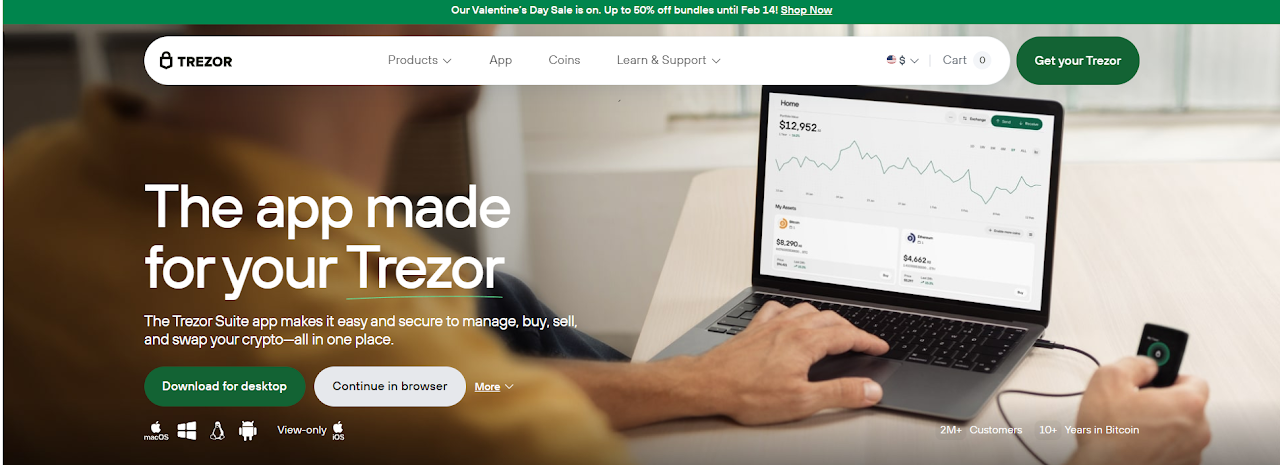
The interface of Trezor Suite is designed to be both intuitive and informative. Upon logging into the application, users are greeted with a clean dashboard that displays an overview of their total crypto balance alongside individual asset data and historical transaction details. Charts and portfolio distribution visuals help users quickly assess their financial standing at a glance, while account labels and activity logs add clarity for better tracking. This user-friendly design makes Trezor Suite accessible to newcomers yet powerful enough for advanced users.
Another major capability of Trezor Suite is its support for a wide range of cryptocurrencies. Thousands of coins and tokens, including major assets like Bitcoin, Ethereum, Cardano, and many ERC‑20 tokens, can be managed within the Suite. Users can view balances, send and receive funds, and organize multiple accounts — all from one place. This diverse asset support makes it easy to build and maintain a multifaceted crypto portfolio without needing multiple tools.
Trezor Suite also includes built‑in functionality for buying, selling, and exchanging crypto directly within the app. Instead of moving funds to external exchanges — which can expose assets to additional risk — users can compare rates from multiple providers and trade securely right from their Suite interface. Swapping one asset for another helps achieve better diversification, while integrated purchase options simplify acquiring new coins.
For users interested in earning rewards on their holdings, Trezor Suite supports staking for selected networks, allowing users to lock up eligible assets in exchange for staking rewards. This feature, paired with the Suite’s portfolio tracking tools, encourages long‑term investment strategies while maintaining the security of a hardware wallet.
Privacy is another critical pillar of Trezor Suite. Optional integration with the Tor network lets users route their traffic through an anonymous network to obscure their IP address and reduce traceability. Advanced features like coin control let users choose which specific unspent transaction outputs to use, offering better privacy and fee management. Discreet mode is available to hide sensitive information when using the app in public environments.
In addition to these built‑in features, Trezor Suite maintains a high level of transparency through open‑source software. The code underlying the application is publicly accessible for inspection, meaning independent developers and security researchers can review and audit it to identify any vulnerabilities. This openness builds trust and ensures the software remains robust against emerging threats.
Trezor Suite also offers flexibility for users who want more control over their data. For advanced users prioritizing self‑sovereignty, Suite can connect to a custom backend server. Running your own Blockbook server, for example, enables complete control over your transaction data and enhances privacy further by avoiding reliance on shared public endpoints.
Even though Trezor Suite is comprehensive on its own, it doesn’t lock users into a single ecosystem. Trezor hardware wallets can also be used with third‑party wallet applications such as MetaMask, Electrum, Exodus, and others, expanding the ways users can interact with their assets. However, using Trezor Suite is generally recommended for the most seamless experience since it’s built specifically for Trezor hardware and designed to maximize security and usability.
In summary, Trezor Suite is a powerful and secure application for managing cryptocurrency assets linked to Trezor hardware wallets. It places security at the center of all operations, keeping private keys offline and requiring device confirmation for sensitive actions. Its intuitive dashboard, wide asset support, and integrated trading tools make portfolio management straightforward and efficient. Privacy tools, open‑source transparency, and advanced user options like custom backends further enhance the user experience. Whether you are new to crypto or a seasoned investor, Trezor Suite provides the tools and protections needed to confidently manage your digital wealth.